
Commercial Roofing Prices: Affordable Commercial Roof Installation Cost, Maintenance Cost, and Repairs in Randburg, Sandton, Boksburg, Roodepoort, Alberton, Johannesburg South, Gauteng
Standing atop a commercial building in Johannesburg, feeling the warm African sun on my face, I couldn’t help but think about commercial roofing prices. The vast expanse of the city stretched out before me. It was then I understood how vital a strong commercial roof is for businesses and livelihoods.
Whether you’re a seasoned property owner or a first-time investor, knowing commercial roofing prices is key. It helps you make smart decisions about your property’s future.
In South Africa, commercial roofing prices vary from R500 to R2000 per square metre. This range shows the different needs of businesses in Johannesburg, Sandton, Pretoria, and Centurion. Our guide aims to clear up what affects these costs, giving you a clear way to plan your project.
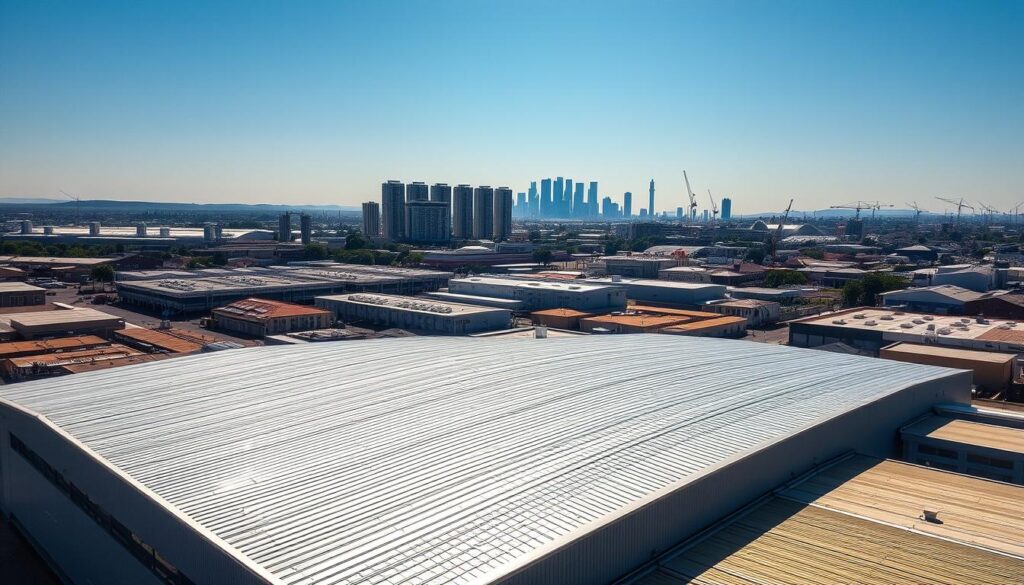
From Sandton’s busy streets to Centurion’s industrial zones, we’ve looked at the average cost of commercial roofing. Our research found that costs can change a lot. This depends on project size, material choice, and location.
For example, a concrete roof in Johannesburg might cost between R600 to R1200 per square metre. On the other hand, a metal sheeting option in Pretoria could be from R450 to R800 per square metre.
We know every rand matters when investing in your business. That’s why we’ve put together this detailed price guide. It’s to help you understand commercial roofing costs better. Whether you’re planning a new installation or a roof replacement, our insights will help you make cost-effective choices for your commercial property – Contact Us
Commercial Roofing Prices: Understanding Commercial Roofing Systems
Commercial roofing systems are key to protecting businesses and their assets. We’ll look at the most common types, their benefits, and how long they last. This will help you choose the right option for your property.
Common Types of Commercial Roofs
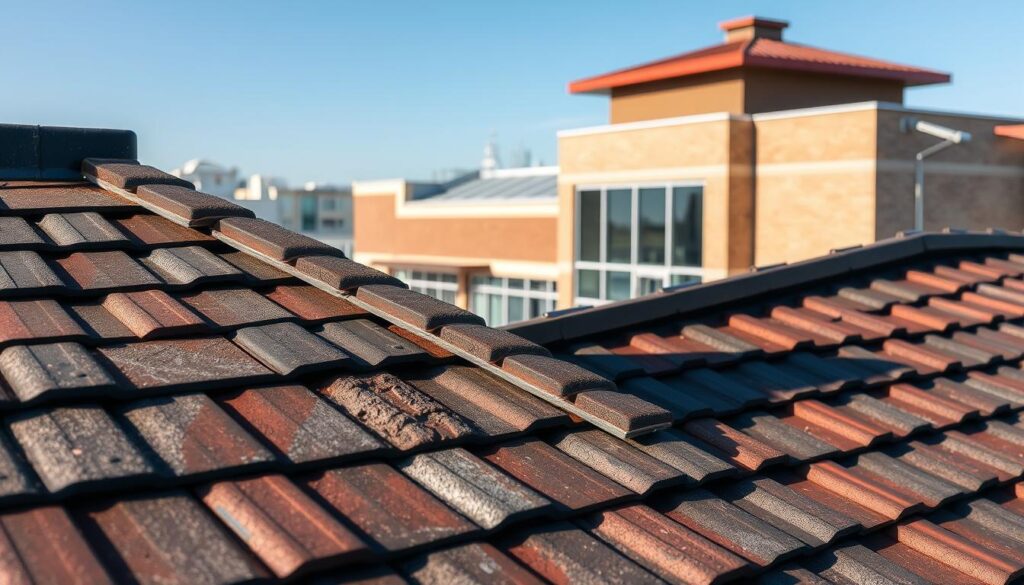
Flat roofs are a favourite for commercial buildings. They’re cost-effective, with prices ranging from R72 to R240 per square foot. Metal roofs, on the other hand, are durable and long-lasting, priced between R72 to R552 per square foot.
Single-ply membranes like TPO, EPDM, and PVC are becoming more popular. TPO roofing costs between R48 to R264 per square foot. EPDM and PVC roofs cost between R72 to R240 per square foot.
Benefits of Different Roofing Materials
Each roofing material has its own benefits. Metal roofs are durable and save energy. TPO and PVC roofs resist UV rays and are eco-friendly. EPDM roofs are flexible and easy to install.
Durability and Lifespan Considerations
The lifespan of commercial roofs varies. Metal roofs can last 50-75 years with care. EPDM and TPO roofs last 20-30 years. When choosing a roof, consider the cost against its lifespan.
| Roofing Material | Average Lifespan | Price Range (per m²) |
|---|---|---|
| Metal | 50-75 years | R768 – R5,928 |
| EPDM | 20-30 years | R768 – R2,568 |
| TPO | 20-30 years | R576 – R2,760 |
| PVC | 20-30 years | R768 – R2,568 |
Commercial Roofing Prices in South African Markets
The South African commercial roofing market is growing fast. Prices differ in each region. In 2026, the market was worth nearly R220.7 billion. It’s expected to hit R336.3 billion by 2030, with a 6.2% annual growth.
Price Ranges by Region
In Johannesburg and Sandton, commercial roofing quotes are higher. This is because these areas are more expensive. On the other hand, Pretoria offers more competitive prices. Here’s a look at the costs:
| Region | Price Range (per square metre) |
|---|---|
| Johannesburg/Sandton | R500 – R600 |
| Pretoria | R450 – R550 |
| Centurion | R475 – R575 |
Material Cost Variations
The type of roofing material greatly affects the cost. In Midrand and Eastrand, you can find a variety of materials. This includes traditional options and newer choices like green roofs and solar tiles.
Spray Polyurethane Foam and Single-Ply Membrane Roofing are becoming more popular. They are chosen for their energy-saving benefits.
Labour Rates Across Major Cities
Labour costs vary in South Africa’s big cities. In Centurion, specialists charge more for their expertise. The demand for sustainable materials and advanced installation is increasing labour costs.

The market is moving towards eco-friendly and energy-saving roofing. This change, along with stricter building codes, is influencing commercial roofing prices in South Africa.
Factors Affecting Commercial Roof Installation Costs – Commercial Roofing Prices
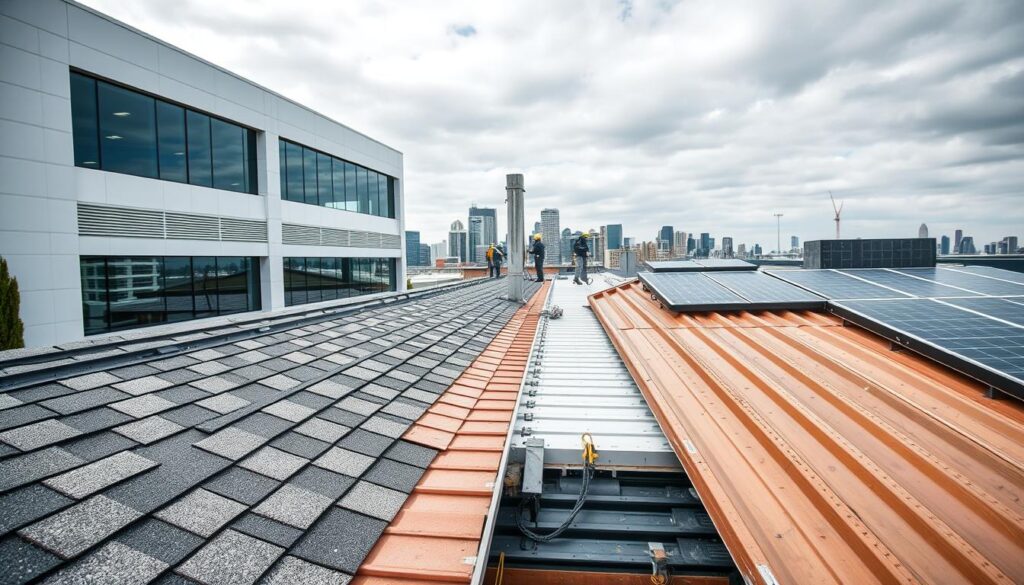
Knowing the costs of industrial and commercial roofing is key for planning your budget. The size and complexity of your roof greatly affect the price. Larger roofs need more materials and labour, which increases costs.
Complex designs, like those with multiple angles or dormers, also add to the cost. This can increase prices by 15-25%, depending on how complex it is.
The type of roofing material you choose is also very important. EPDM roofing is often the cheapest option among single-ply systems. It’s a favourite for those looking for affordable commercial roofing.
PVC roofing, on the other hand, is more expensive but offers fire resistance and is eco-friendly. It also has long-term benefits.
Accessibility is another big factor. Roofs on multi-story buildings can cost 20-30% more because of the need for special equipment. For example, replacing a roof on a ten-story building adds extra costs for removing the old roof from that height.
| Factor | Impact on Cost |
|---|---|
| Roof Size | Proportional increase |
| Material Thickness | Thicker materials cost more |
| Insulation | Adds to overall cost |
| Roof Slope | Steeper roofs more expensive |
| Building Height | Higher buildings increase costs |
Local building codes can also affect costs, mainly for fasteners and wind load requirements. Following these rules can add 5-10% to the cost. Green commercial roofing solutions might be 15-30% more expensive at first but can save a lot on energy in the long run.
Lastly, don’t forget about the cost of commercial roof coatings. They can be a smart choice to extend your roof’s life and improve energy efficiency. Choosing the right roofing material means weighing the initial cost against long-term savings and maintenance needs.
Commercial Roofing Maintenance and Repair Expenses – Commercial Roofing Prices
Keeping your commercial roof in good condition is vital. We’ll look at the costs of maintenance and repairs. This will help you plan your roofing budget wisely.
Routine Maintenance Costs
Regular care stops expensive repairs. A good maintenance plan includes checks, cleaning, and reports. Costs vary from R1.50 to R2.70 per square foot.
For a 15,000 square foot roof, you might spend about R15000 a year.
| Service | Cost (per square meter) | Annual Cost (1500 sq metre) |
|---|---|---|
| Basic Maintenance | R1.50 – R2.70 | R15000 – R30000 |
| Premium Maintenance | R2.80 – R3.00 | R25000 – R45000 |
Emergency Repair Pricing
Unexpected problems can lead to repair costs. Minor fixes in Johannesburg cost between R500 and R2,000. Moderate repairs are R2,000 to R8,000.
Major repairs can cost over R10,000. This shows why regular checks are important.
Long-term Maintenance Plans
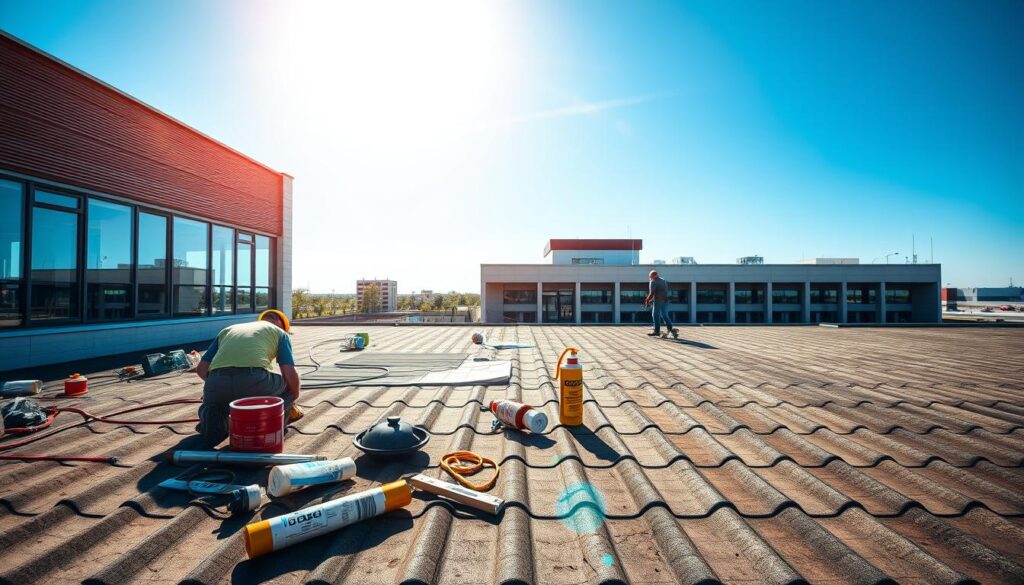
Long-term plans can save money. They include regular checks, small repairs, and waterproofing. Early fixes prevent big damage and extend your roof’s life.
Set aside at least R0.80 per square foot each year for maintenance.
Regular maintenance can extend the life of a roofing system by up to 10 years or more, making it a wise investment for any commercial property owner.
Whether you have torch-on, rubber, or heat-reflective roofing, regular care is essential. It keeps your roof working well and lasting longer.
Energy-Efficient Roofing Solutions and ROI
Choosing energy-efficient commercial roofing can save a lot of money in the long run.
Green Roofing Options
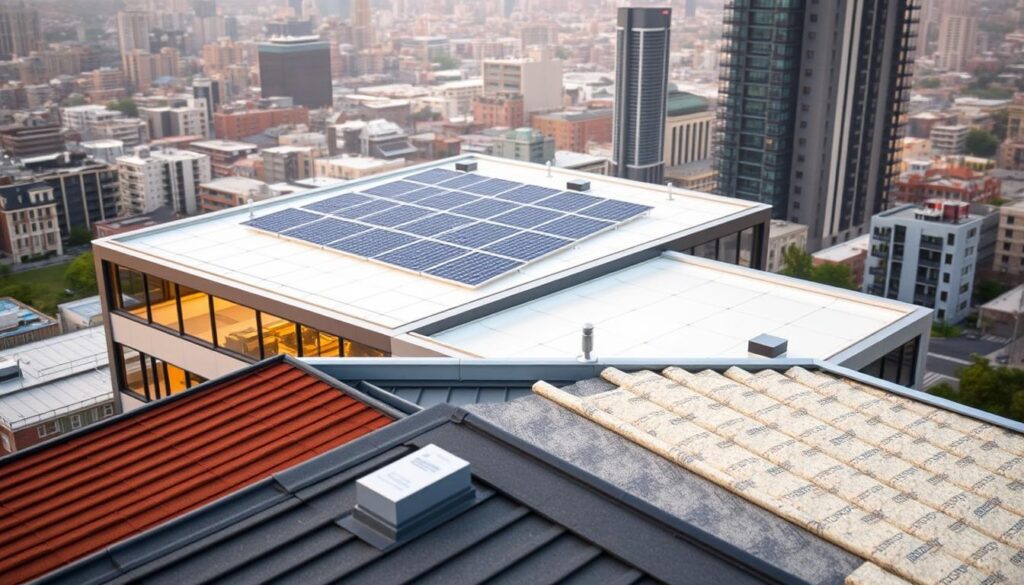
There are many energy-saving roofing choices. Cool roofs and green roofs are great examples. They can cut energy costs by 20% and last up to 30 years.
Materials like metal or thermoplastic are also top picks. They’re durable and save energy too.
Energy Savings Calculations
Upgrading your roof can pay off big time. You could save 60% to 70% of your investment. Upgrades can save up to 30% on energy each year.
Solar panels might cost a lot at first. But they can save a lot on electricity bills over time.
Government Incentives and Rebates
South African businesses can get help for energy-efficient roofs. There are tax breaks and rebates for solar panels or cool roofs. The cost of checking your roof is small compared to the savings.
When picking a roofing option, look for the best warranties. With care, these roofs can increase your property’s value by 10% to 20%. This gives you both short-term and long-term financial gains.
Commercial Roof Insurance and Warranty Coverage – Commercial Roofing Prices
It’s key to protect your investment in heavy-duty industrial roofing. Knowing about insurance and warranties can help save money on future re-roofing costs.
Most single-ply commercial roofing systems come with a 20-year material warranty. Contractor’s warranties are shorter, lasting about 2 years. They cover both material defects and installation errors fully.

Warranties don’t cover storm damage. Keeping your roof in good shape is vital, more so for cold storage & factory roofs. Not doing regular maintenance or making changes without permission can cancel your warranty.
Insurance for commercial roofs needs to be renewed every year. It might not cover normal wear or neglect. So, it’s important to keep your roof well-maintained.
| Warranty Type | Duration | Coverage |
|---|---|---|
| Material | 20 years | 50% material defects |
| Contractor’s | 2-5 years | 50% installation errors |
| Manufacturer’s NDL | 20 years | 100% material & installation |
When planning for roofing costs in shopping centres or other commercial buildings, remember warranty fees. These can increase your project cost by thousands. But, material warranties are usually free. You’ll often get a 20-year manufacturer warranty and a 2-year contractor warranty in a package.
Warranties are for fixing problems after they happen, not preventing them. Always check the details and know your duties as a building owner to keep your warranty valid.
Choosing a Commercial Roofing Contractor – Commercial Roofing Prices
Finding the right commercial roofing contractor is key to your project’s success. We’ll help you understand what to look for. This is important for any roofing needs, like for hospitals or warehouses.
Qualification Requirements
When picking a contractor, check if they are legally registered and follow government rules. A good company has a valid licence and insurance. Experience matters too; a longer history often means better service.
Comparing Quotes and Services
Roofing costs can change a lot, depending on the materials and project size. It’s important to compare prices carefully. Professional services usually charge by the square or linear foot.
Higher-quality materials might cost more but last longer. Always check the warranty terms and conditions of each contractor.
Project Timeline Considerations
Timing is important, influenced by the season, material availability, and project size. Professional roofing companies can do the job quickly and well. This can save you money in the long run.
When talking about your project, ask for clear estimates to plan your budget. It’s also important to ensure the contractor follows safety rules to avoid accidents.
FAQ
1. What is the average cost of commercial roofing per square metre in Johannesburg?
In Johannesburg, commercial roofing costs range from R300 to R1,500 per square metre. This depends on the material and project complexity. Metal roofs are pricier, while single-ply membranes are more budget-friendly.
2. How do commercial roofing prices compare between Johannesburg and Pretoria?
Commercial roofing in Johannesburg is slightly pricier than in Pretoria. Labour costs and demand in Johannesburg drive this difference. The price gap is usually 5% to 15%.
3. What factors affect the cost of a commercial roof installation?
Several factors affect commercial roof installation costs. These include roof size, material choice, and accessibility. Local codes and extra features like insulation also play a role. The roof’s current state and the season can influence prices too.
4. How much should I budget for annual commercial roof maintenance?
Budget 2% to 4% of your roof’s total cost for annual upkeep. For a R1,000,000 roof, set aside R20,000 to R40,000 yearly. This covers maintenance and minor repairs.
5. Are there energy-efficient roofing options available for commercial buildings in South Africa?
Yes, South Africa offers energy-saving roofing options. Cool roofs reflect sunlight, green roofs insulate, and solar roofs support panels. These may cost more upfront but save energy over time.
6. What type of warranty should I expect for a commercial roof?
Commercial roofs come with material warranties (10-30 years) and workmanship guarantees (1-5 years). Premium systems might offer longer warranties. Always check the warranty terms to know what’s covered.
7. How long does a commercial roof installation typically take?
Installation time varies by roof size, system type, and weather. Small to medium projects might take 1-2 weeks. Larger or more complex ones could take weeks or months.
8. Are there any government incentives for energy-efficient commercial roofing in South Africa?
South Africa has programmes for energy-efficient buildings, including roofing. These might include tax breaks or rebates. Check with local authorities or a roofing expert for current offers.
9. How do I choose the right commercial roofing contractor in Gauteng?
Look for licensed, experienced contractors with good references and insurance. Compare quotes but value quality over price. Consider materials, warranties, and the contractor’s reputation.
10. What’s the lifespan of a typical commercial roof in South Africa?
A commercial roof’s lifespan varies by material, installation, and maintenance. Metal roofs last 40-70 years, while single-ply membranes last 20-30 years. Built-up roofs last 15-30 years. Regular upkeep extends a roof’s life.

